Home / Services / Lease return inspection
Handing your lease back? See what they will charge for while there is still time to fix it.
Before the lessor's inspector walks around your car, I do the same walk with your lessor's own guide. I measure every tire and every brake I can reach, scan the car for stored faults and warning lights, and go over the glass, the body and the interior. You get it in writing the same day, and the time to decide what is cheaper to fix than to be billed for.
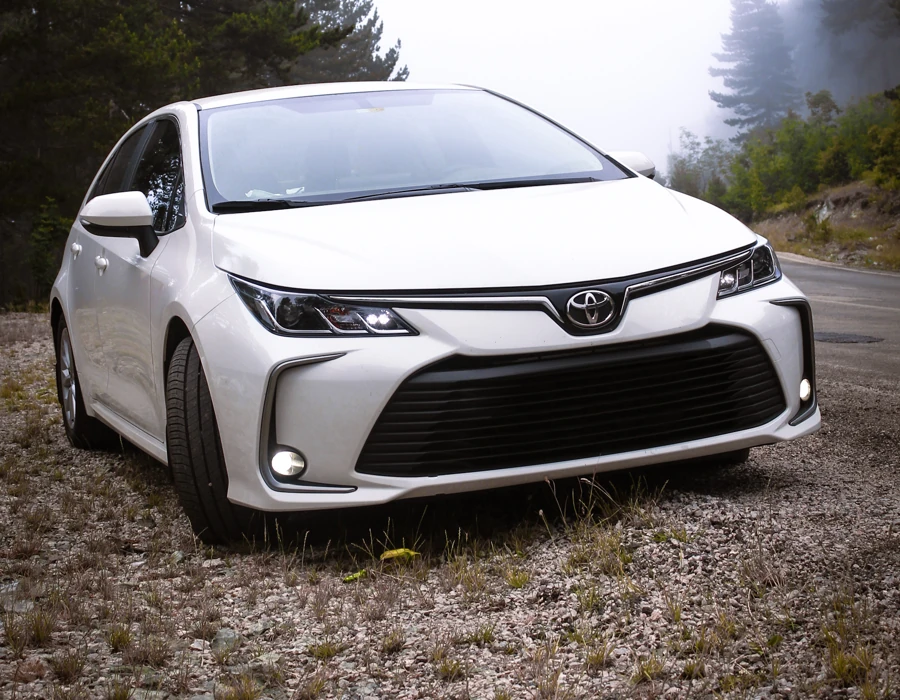
What gets charged when a lease comes back
Every lessor publishes a wear and tear guide, and every one draws the line in a different place. These are the lines in five Canadian guides I read. Yours may differ, so read your own: it came with your lease paperwork, and most lessors post it on their website.
Tires
- Ford Credit Canada's guide charges for full replacement under 3.2 mm of tread in all grooves.
- Honda Financial Services' guide charges under 3.3 mm at the shallowest point, and says all four tires must be the same brand.
- GM Financial Canada's guide charges at 3 mm or less at the shallowest point, spare included, and wants the two tires on each axle to match in type and brand.
- Volkswagen Canada and Nissan Canada Finance draw the line at 3.2 mm. Sidewall plugs are charged in the Ford, Honda and GM guides.
Windshield and glass
- Ford's guide says all glass damage is chargeable: up to two chips or cracks per panel that each fit inside a 25.4 mm circle are charged as a repair, anything else as a replacement.
- Honda's guide allows up to three small chips under 3.2 mm, and charges for any chip over 1 cm, any damage from 3.2 mm to 1 cm in the driver's field of vision, and every crack.
- GM's guide allows up to three chips under 1 cm, and charges for a cracked windshield.
Dents and scratches
- Ford's guide lets up to three dings, dents or scratches per panel go uncharged, each up to 101.6 mm across.
- Honda's guide allows dents and scratches under 5 cm, and counts more than three dents on one panel as excess.
- GM's guide allows fewer than four dings per panel under 2.5 cm that have not broken the paint. Volkswagen's charges for anything over 2.5 cm, or more than two per panel. Nissan's charges for dents over 2 cm.
Interior
- Ford's guide lets one permanent stain per panel go uncharged up to 12.7 mm, two burn holes up to 3.2 mm, and two cuts or tears up to 12.7 mm.
- Honda's guide charges for cracks, tears, burns or heavy stains over 1.5 cm.
- GM's guide charges for permanent stains and any hole, cut or tear in the upholstery.
Keys, manual and missing parts
- Ford's checklist asks for all keys and fobs, the owner's manual, the spare and the tire tools, and all the original equipment, undamaged.
- Honda's guide charges for a missing owner's manual and missing keys. GM's charges for missing equipment, the keyless remote included.
Things that do not work
- Ford's guide counts mechanical and electrical malfunctions and poor quality repairs as excess wear. GM's charges for malfunctioning or nonoperational equipment.
- Volkswagen Canada's pre-inspection page lists service lights left on, such as the check engine or airbag light.
- Honda's guide says its inspection looks at whether the car is in good working order and whether the maintenance schedule in the owner's manual was followed.
- None of the five guides sets a brake pad thickness.
Kilometres over your allowance are billed too, at the rate in your contract. That one is a number on the odometer, and nothing I do changes it.
What I check
I come to the car, in your driveway or your work parking lot. Have your lessor's guide open on your phone and I go through it with the car in front of us. Nothing is taken apart.
- Every tire, measuredTread depth on each tire in millimetres, the brand and size on each axle, sidewall damage and plugs.
- Every brake I can reach, measuredPad or shoe thickness in millimetres where it can be seen. What cannot be seen is written down as not measured, never passed.
- A scan of the car's computersStored and pending fault codes, and any warning light on the dash, on the systems my scanner supports for that car.
- Glass and lightsWindshield chips and cracks, where they sit and how big they are, and the lenses.
- Body, panel by panelDents, scratches and paint damage, and scuffs on the wheels, against the sizes in your guide.
- Interior, keys and the restStains, burns and tears, how many keys you have, the manual, and the spare and its tools.
What you get
A written report the same day: the actual measurements, a photo of each finding, and anything I could not check with the reason. With your guide beside it, you can see which items cross its lines before the lessor's inspector writes them down, and decide what to fix, what to leave and what to simply pay.
I do not work for the lessor, I do not deal with them for you, and I cannot promise what they will charge. Their guide and their inspector decide that. What I give you is the same look, earlier, while you still have time to act on it.
What I can fix, and what I cannot
I can do these in your driveway
- Brakes: pads and rotors.
- A tired battery.
- Burnt out bulbs in the headlights, tail lights and signals.
- Fluids and routine maintenance.
Each one is a flat quote for your car, agreed before I start.
These go to a shop
- Tires. I do not mount and balance tires: it is on my published list of jobs I turn down.
- Glass, dents, paint and upholstery.
If the report finds any of these, I tell you plainly which kind of shop it needs. Ford's guide also notes that some damage may be covered by your insurance, which takes time to claim.
When to book
Before the lessor's inspection, with enough time left to fix things. Ford Credit Canada says its inspection can be scheduled within 90 days of the lease end, and Volkswagen Canada says to set up the final inspection within 90 days. Honda's guide says its inspection company calls to book 30 to 45 days before maturity.
So about three months before your lease ends is the right time for my look. The Ford, Honda, GM and Volkswagen material all allows repairs before the return. How the charge then comes off differs: GM and Volkswagen ask for the repair receipts, and Honda's guide says to have your Honda dealer update them. Follow your own lessor's steps.
Questions
Is this the lessor's inspection?
No. Your lessor still sends its own inspector, and that inspection decides the charges. Mine comes first and works for you, so you see the list before they write theirs.
Which package is this?
The Full Inspection, $249 base fee. It is the package with the tread and pad measurements and the same-day written report, and those are what this job needs. Look & Scan ($149) has no measurements and no written report, so it does not fit. Any travel charge and the total are agreed before you confirm.
Do I have to fix everything on the list?
No. Some things cost less to fix than to be charged for, some cost more, and some you may decide to just pay. The point is to make that call with the list in front of you, not to find out from the final invoice.
Where do you come?
Your driveway or your work parking lot in Mississauga, Oakville, Milton, Brampton or Etobicoke. Outside those, send the actual location and I confirm coverage and any travel charge before you commit.
Book the inspection
Pick a time, then tell me the car and where it is parked: your driveway or your work lot. The Full Inspection is already chosen.
The 150-point checklist is published, and the sample report shows the format before you book.
The guides quoted on this page
Lessors change their guides. If yours says something different, yours is the one that counts.